
The E‑Commerce Revolution in India
India's digital commerce landscape has undergone a massive transformation over the past decade. With over 900 million internet users and a rapidly growing middle class, the country's online shopping market has reached an inflection point. What started as a novelty—buying gadgets, clothing, and daily essentials online—has evolved into a sophisticated ecosystem where consumers expect seamless, engaging, and personalized shopping experiences.
Yet, despite this growth, a persistent problem remains: most product pages still rely on static images and brief descriptions. Shoppers are asked to imagine how a product feels, looks, or functions in their own lives. This leap of faith creates friction, leading to lower conversion rates, higher return volumes, and eroding trust.
Enter Experience Commerce
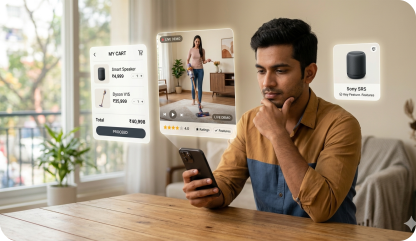
Experience commerce represents the next evolution in digital retail. Rather than merely displaying product information, it enables customers to interact with products virtually—through 3D models, augmented reality (AR) try‑ons, live video walkthroughs, and interactive demonstrations. The goal is simple: let shoppers "experience" the product before buying.
Imagine a shopper browsing for a washing machine. Instead of scrolling through static specs, they can watch a live demo showing the machine in action, see how it fits in a simulated home environment, and even compare noise levels. This level of engagement builds confidence and dramatically reduces purchase hesitation.
Why India Is Ready Now
Several key factors converge to make India the ideal market for experience‑led commerce:
- Smartphone Penetration: Over 75% of Indian consumers access the internet via smartphones, many of which support AR and high‑quality video playback.
- Video Consumption: India is one of the largest video‑watching markets globally, with users accustomed to live streaming and short‑form video.
- Trust Deficit: Many online shoppers remain skeptical about product quality. Virtual demos address this by providing transparency.
- Competitive Pressure: D2C brands are already experimenting with experience‑led strategies, raising consumer expectations.
Key Benefits for Brands
Implementing experience commerce delivers measurable business impact:
- Higher Conversion Rates: Brands report 15‑30% lifts in conversion after adding interactive demos.
- Reduced Returns: When customers understand products better, return requests drop significantly.
- Increased Average Order Value: Upsell and cross‑sell opportunities arise naturally during guided experiences.
- Stronger Brand Loyalty: Positive, informative experiences turn one‑time buyers into repeat customers.
The Future Is Here
As AR technologies become more accessible and 5G rolls out nationwide, the barrier to entry for experience commerce will only lower. Brands that adopt early will capture market share and set new standards for customer engagement.
The question is no longer "if" experience commerce will work in India—it's "how quickly can you integrate it into your store?"